Above the Shopfronts: Hunting the Cinemas, Ballrooms and Music Rooms Tollcross Has Forgotten
Photo: Unknown, CC BY-SA 3.0, via Wikimedia Commons
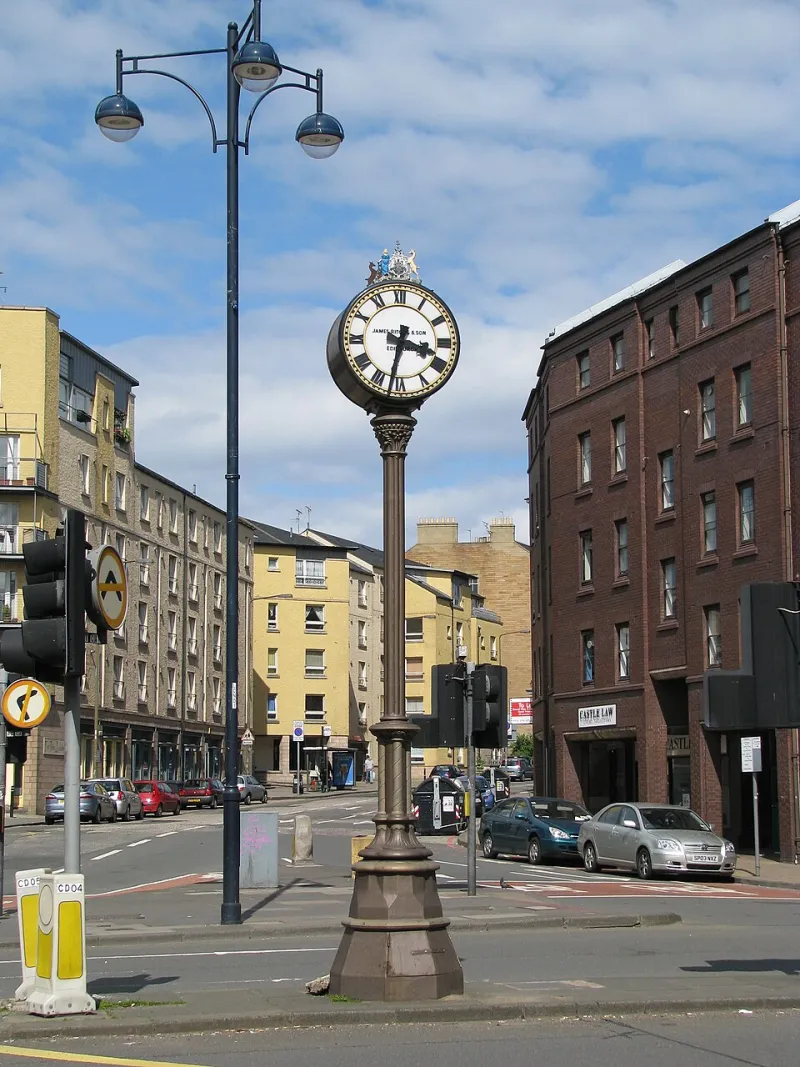
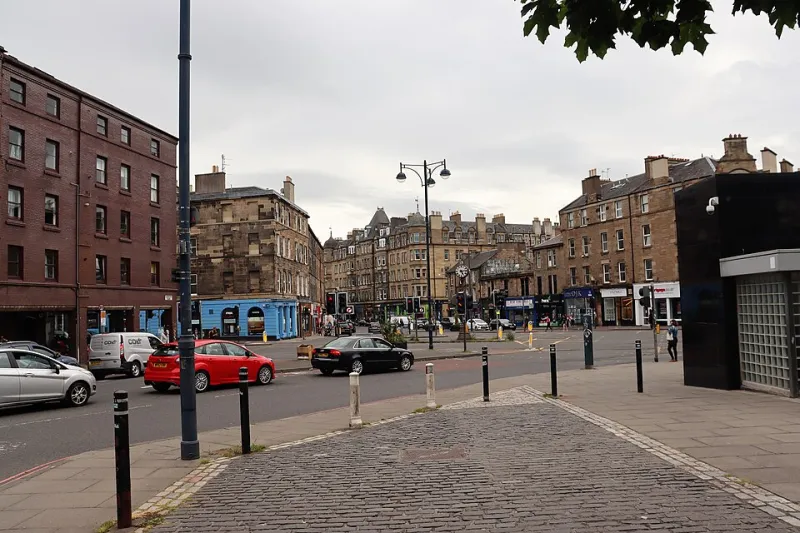
Stand at the lights where Leven Street meets Home Street on a wet evening and look up. Above the takeaways, the phone shops and the charity-shop rails, the upper storeys are still doing the work they were built for a century ago: tall windows, deep cornices, the occasional scar where a name was chiselled off or painted over. Tollcross was, for about sixty years, one of the busiest entertainment districts in Edinburgh. Most of that has gone. The buildings, stubbornly, have not.
This is not a tour of plaques. It is a tour of clues — the sort you can only spot by standing on the pavement with your head tilted, looking a bit odd.
The two that never went dark
Start with the survivors, because they teach you what to look for. The King's Theatre on Leven Street opened in 1906 as a variety house and has been a theatre ever since; its scale tells you what a Tollcross crowd could once support. A few minutes away, the Cameo on Home Street began life in 1914 as the King's Cinema and has been showing films, with interruptions, for more than a century. Both are still working buildings, which makes them useful reference points: when you find a ghost venue, you are usually looking at a stripped-down version of one of these.
The picture house that became a shopfront
Walk west along the Tollcross frontage and watch the roofline. Cinema architecture gives itself away in three places. First, the roof: a projection box needs a shallow, flat-topped addition at the rear, often still visible from the street as a brick lump that matches nothing else on the building. Second, the windows: picture houses needed few, so a former cinema's upper floor tends to be oddly blank between ornate openings — sometimes with the openings bricked in flush. Third, the entrance: a wide, theatrical doorway, now often subdivided into two or three retail units, with the original arch still framing the whole thing.
Local memory holds that at least one Tollcross frontage was a picture house before the talkies arrived, and the rate books and old photographs in the local history collections back up the shape of it. The name is gone. The doorway is not.
Ballrooms above the shops
The dance halls are harder to spot and more fun to find. Most occupied first floors, which means you should be looking for a run of tall sash windows with a shallow balcony or a fire escape, and — the giveaway — a set of double doors at street level that lead nowhere commercial, still wide enough for a hundred people to file through. Look for faded lettering in the stone or on the render: words like palais, ballroom, assembly rooms, academy. Look also at the floor structure. A sprung dance floor sits on joists with a gap, and in old buildings you can sometimes see the extra depth in the way the windows sit unusually high above the pavement.
After the war these rooms had a good decade, then a slow one, then television finished the job. The ones that survived became snooker halls, then storage, then flats — or, in a couple of cases, a gym, which is the closest modern equivalent to what went on there.
The halls that hosted everything
The church and church-hall buildings around Tollcross were the neighbourhood's true multi-purpose venues: concerts on a Saturday, ceilidhs, meetings, jumble sales, amateur dramatics, and in the 1960s and 70s the occasional gig that nobody thought to write down. Hall architecture gives you two reliable tells — a high, plain internal volume (visible from the street as an unusually tall first floor) and a rear or side door with a stage canopy over it, built for loading scenery and instruments.
Much of this stock is still in use, just not for music. Yoga, toddlers, badminton, jumble sales again. The acoustic has not changed. Only the booking does.
Five clues to read a facade
- A brick projection box at the rear roofline that matches nothing else on the building.
- Blank or bricked-up upper windows in a row of otherwise decorative openings.
- A wide, subdivided entrance with an arch surviving above the modern shopfront.
- Ghost lettering on render or stone: palais, ballroom, cinema, hall, academy.
- A stage door round the side, with a canopy, on a building that now sells furniture.
A forty-minute ghost-venue walk
Begin at the King's Theatre on Leven Street (1) and take a moment to note the scale of the thing. Walk west to the Tollcross junction (2) and turn slowly through 360 degrees, reading the upper storeys rather than the signs. Head along Home Street towards Bruntsfield (3), where the Cameo sits as your control sample, then cut back via the side streets behind the main road (4) — this is where the halls and the odd first-floor ballroom hide. Finish at Lochrin Basin (5), where the canal warehouses did a different kind of entertainment business entirely.
Why bother looking
Because the shops change every few years and the buildings do not. A neighbourhood's memory is not kept in a museum, it is kept in the depth of a window reveal and the width of a doorway. Once you have learned to see the projection box and the ghost lettering, Tollcross stops being a place you pass through and becomes a place with a second, older street layered on top of the first. All it costs is a stiff neck.