The Edge of the Story: Where Tollcross Stops and Somewhere Else Begins
Photo: Kirsty S. Ross , CC BY 4.0, via Wikimedia Commons
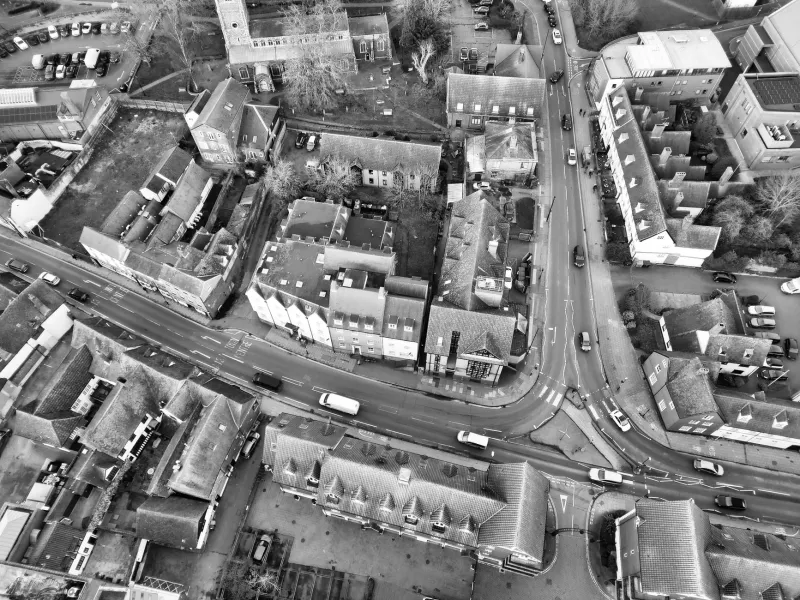
Ask five people in Tollcross where Tollcross ends and you will get five answers, one of them delivered with real feeling. Ask the same question about Morningside or Stockbridge and you will get something close to consensus. Tollcross is different. It is a junction that became a district, and it has never quite finished the job.
The problem in one sentence
Tollcross has a crossroads, a church, a theatre and a chunk of postcode — but no agreed edge, because the neighbourhood grew outward from a meeting of roads rather than inward from a drawn line.
Four frontiers, four arguments
North: the theatre line
The King's Theatre is unambiguously Tollcross. Cross Gilmore Place and walk up towards the Grassmarket and the argument starts. Most people put the boundary somewhere around the point where the pubs stop being locals and start being destinations. Nobody can name the exact doorway, which is the tell that the boundary is a habit rather than a fact.
East: Lauriston and the hospital wall
Head towards Lauriston Place and the housing changes character — bigger blocks, more institutional frontage, a different rhythm of foot traffic. Residents here will tell you they live in Tollcross. Estate agents will tell you something else entirely. Both are describing the same set of stairs.
South: the Cameo problem
This is the great local paradox. The cinema sits on Home Street, which is Tollcross by any reasonable reading of the map. And yet generations of Edinburgh people have said 'the Cameo in Bruntsfield' without a flicker of doubt. If a building that central can be claimed by the neighbours, the border is not a line at all. It is a mood.
West: the canal as seam
Lochrin Basin is a natural edge — water always is. But Fountainbridge on the far side is not a different world; it shares the same buses, the same corner shops, the same rush hour. The canal makes the boundary look harder than it behaves. Cross it and almost nothing changes except which way you turn for milk.
What the postcode will and will not tell you
Most of Tollcross sits in EH3 9, which sounds decisive until you notice how far that district stretches and how much of it feels like somewhere else. Bruntsfield begins around EH10, the Meadows side edges into EH8 and EH9, and Fountainbridge shares a postcode with streets that would never call themselves Fountainbridge.
Postcodes are delivery rounds. They were designed so a van could find a door, not so a person could find an identity. Use them as evidence, never as a verdict.
The boundary walk: five tests
Forty minutes, flat, no hills worth mentioning. Do it on a weekday when the pavements are busy.
1. The junction, uphill. Start at the crossroads and walk up Home Street. Somewhere between the first and second block, ask yourself when you stopped feeling like you were in Tollcross. Note the shop you were passing. That is your personal border. Everyone's is different and everyone's is roughly thirty metres from everyone else's.
2. The Bruntsfield test. Carry on to the top and ask three strangers where Tollcross is. Two will point vaguely behind you. One will look confused. This is not ignorance; it is an accurate report of how soft the edge is.
3. Back down Leven Street. Past the theatre, to the corner of Gilmore Place. Stand on each corner in turn. Four corners, four different answers about which neighbourhood you are standing in.
4. Down to the basin. Cross the canal and turn around. The view back is the single best argument for where Tollcross ends, because from the water it looks like one place with one skyline.
5. The Meadows edge. Walk the path along the park until the gates. Here the border is not a street at all but a fence and a change of purpose. Parks make excellent boundaries because nobody has to agree about them.
Shopkeepers' loyalties
Ask a shop what neighbourhood it is in and you rarely get geography. You get customers. A business on the Bruntsfield side will call itself Tollcross if its regulars walk up from the junction, and a business a hundred metres closer will claim the opposite because its trade comes down from the park. Identity here is measured in footsteps, not metres.
The verdict: a soft border
Tollcross is not a polygon. It is a set of overlapping habits — where you turn, where you queue, which way you walk when it rains. The edges fray in four directions and nobody has ever been harmed by the fraying.
Which means the honest answer to 'where does Tollcross end?' is: just past wherever you stopped needing to explain it.
Why it still matters
Boundaries sound like a pub argument until a bin lorry, a road closure or a community consultation arrives. Then the lines drawn on somebody's map start to affect pavements, planting, funding and how a place is described to people who have never been. The soft border is charming. It is also, occasionally, expensive.
Which is why the argument is worth having. Not to win it — nobody wins it — but because arguing about where a place ends is the most reliable way of working out what it is.