Twelve Doorways, One Story: Reading Tollcross from the Ground Up
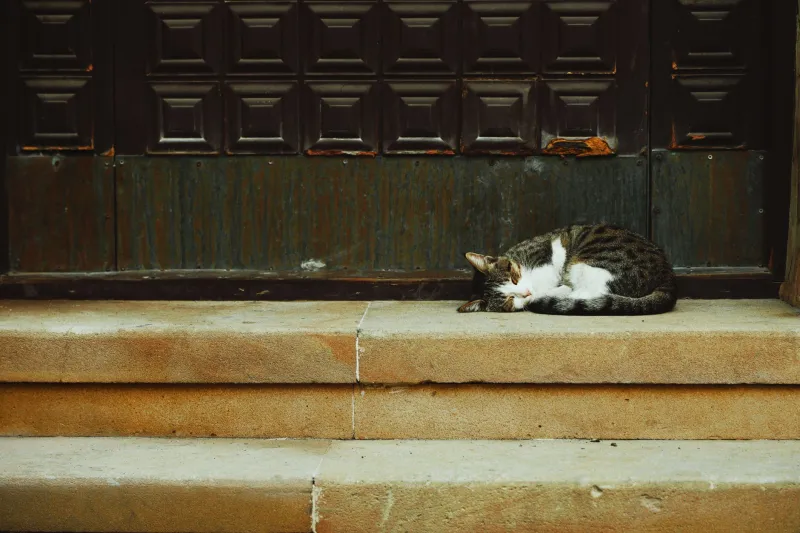
Tollcross is easy to read from above. The theatre roof, the church spire, the bulk of the Usher Hall — these are the shapes that end up on postcards. But the neighbourhood's real history is at knee height and shoulder height: in doorways, steps, closes and shop entrances. Thresholds are where a place meets its people. They tell you who was expected, who was kept waiting, who was served and who was simply passing through.
This is a walking route, but it is also an argument. Start at the Tollcross junction and finish at Fountainbridge Library. Look at the doors, not the buildings. And remember that most of these thresholds are still in use. Don't block them, don't photograph people without asking, and don't treat a working entrance as a monument.
1. The former bank doorway at Tollcross junction
Begin where the roads meet. The old bank frontage at the junction is a lesson in confidence: stone, steps, a door set back from the pavement as if money needed a run-up. Banks used to be built to look like they would outlast you. This one still does, even if the counters inside have changed hands. Notice the step. A threshold with a step is a threshold that sorts people — not always fairly.
2. King's Theatre entrance, Leven Street
The King's is the neighbourhood's grandest doorway, and also its most democratic. Theatre entrances are designed for arrival: canopy, lights, a place to queue, a place to be seen. The door itself is less important than the space in front of it. That is where audiences have gathered for generations, in coats and queues, before the curtain goes up. Look at the wear on the steps. That is not decay. That is use.
3. Traverse Theatre door, Cambridge Street
The Traverse is a newer threshold, and a more modest one. Its entrance is close to the street, almost conversational. That fits a theatre built on new writing and argument rather than marble and ceremony. The door says: come in, the play is already happening. It is a reminder that Tollcross has always had two kinds of culture — the civic and the experimental — and that they sometimes share a pavement.
4. Usher Hall steps, Lothian Road
The Usher Hall's steps are a stage before the stage. People meet on them, smoke on them, wait for latecomers on them. The building's entrance is classical, but the steps are social. On concert nights they turn into a temporary living room. On quiet afternoons they are a place to sit and watch Lothian Road do its thing. Thresholds like this are not just doors. They are meeting points with a roof nearby.
5. Cameo entrance, Home Street
The Cameo's doorway is a shopfront doorway, which is exactly the point. Cinema has always been a commercial pleasure, and the Cameo wears its history lightly: posters, a canopy, a box office you can almost reach from the pavement. The threshold is low. You don't need to dress up. That low door is part of the cinema's character — a place that has welcomed people in for decades without asking them to become someone else first.
6. A tenement close mouth on Home Street
Look for the tiled or stone close entrances between shopfronts. These are the most important thresholds in Tollcross, and the least celebrated. A tenement close is a shared front door. It is where the private city begins, but it is also where neighbours meet, where deliveries stop, where prams are parked and where arguments spill out. The close mouth is a boundary, but it is a porous one. You can read the whole social history of Edinburgh housing in a single step through one of these arches.
7. A shop threshold on Leven Street
Find a shop door with a tiled stall riser or a worn step. Shop thresholds are designed to slow you down without stopping you. The door is open, the light is on, the step is low. But look at the wear: the middle of the step is always more worn than the edges. That is footfall made visible. Tollcross has always been a shopping street for people on their way somewhere else. The thresholds prove it.
8. The Blackbird doorway, Leven Street
A pub door is a licensed threshold. It says: come in, but on our terms. The Blackbird's entrance is the classic pub arrangement — a door that opens straight into the room, no lobby, no ceremony. That directness is part of the appeal. Pubs are warm rooms with rules, and the doorway is where the rules begin. Look at the step. Look at the hand-worn paint. Then go in and buy a half, because this is a history you can still use.
9. Church steps on Brougham Street
Church steps are thresholds with a double life. They are religious architecture, but they are also public seating, waiting space and, historically, a place where charity was distributed. The steps lift the door above the pavement, which is both practical and symbolic. You climb to enter. That climb is the point. Even if the building is closed, the steps still do a job: they give the street a pause.
10. Tollcross Primary School gate
A school gate is a threshold you are not meant to cross without a reason. That is what makes it interesting. It is one of the few doorways in the neighbourhood that is explicitly for children, and its history is one of expansion, overcrowding, changing catchments and playground noise. The gate is a hard boundary, but the pavement outside is a daily gathering point. Parents have waited there for generations. That waiting is part of the school's architecture too.
11. Fountainbridge Library door, Dundee Street
Library doors are quietly radical. They are public, free and heated. The Fountainbridge Library entrance is not grand, but it is welcoming, and that is a different kind of architecture. Carnegie libraries were built on the idea that self-improvement should have a front door anyone could use. Look at the step, the noticeboard, the handrail. Then go in. The threshold is still working.
12. Canal-side steps at Fountainbridge
Finish at the canal, where the steps down to the water are a reminder that Tollcross was once an industrial neighbourhood as much as a civic one. These are working steps, not ceremonial ones. They take you from street level to towpath level, from the shopping street to the old transport route. The threshold is literal: a change of level, a change of pace, a change of history. Stand there for a minute. You have walked from bank to theatre to tenement to school to library. That is Tollcross in twelve doorways.